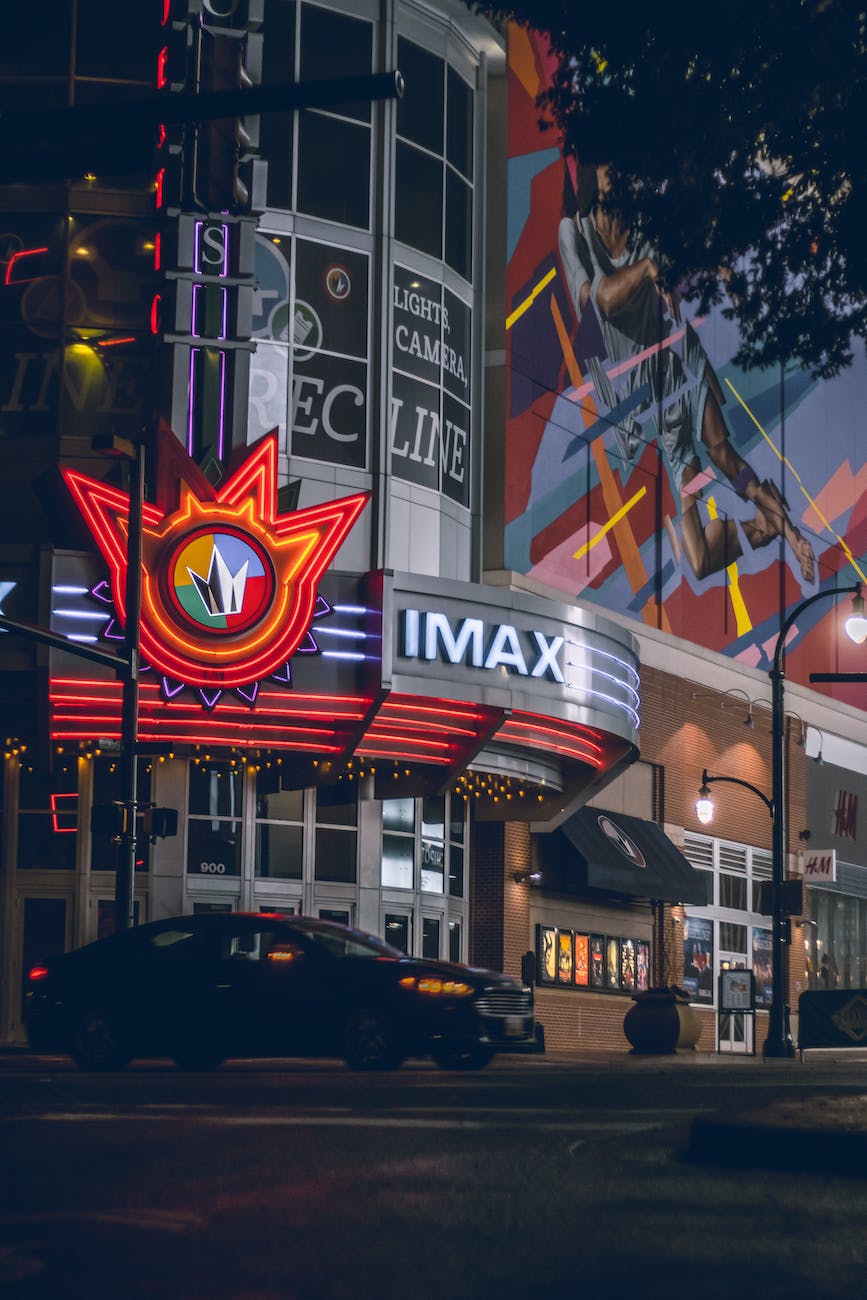
Growing up, my parents had some tight reins on what media we were allowed to consume; most of the films we watched were either pre-scanned for anything “questionable” or were from the Hays Code era of Hollywood, a time starting in 1934 and started to wane in the 1960s where there was extreme censorship in most films. Now that I am in my 30s and have thought back to that time of my life, I am honestly very appreciative of that time, even though I was a bit sad I was not watching what the “cool kids” were watching. From being raised on old movies, I accumulated deep respect for early Hollywood and saw many classics that many people have never even heard of; this allowed me to start conversations with the senior professionals at work, increasing my network with them. I naturally became a cinephile respecting the former greats like Audrey Hepburn, Cary Grant, Charles Laughton, Fred Astaire, and many more, enabling me to watch the evolution of cinema as technology and techniques evolved.
Did you know films did not commonly use the zoom lens till 1946? Sure, the first use was in 1927, but the zoom was quite the oddity until the mid-1940s; most shots were static to focus on a target. Film back in the day was limited to 10 minutes of filming at a time, and the movie projectors could only handle 20 minutes of footage on a reel. This 20-minute limit was something editors had to work around to prevent big scenes from being in the middle of a transition. You can still see the indicator of a reel ending as the black dot on the top of the screen for some old films. These are just a couple of things I appreciated since I had this unique experience.
We would commonly go on sprees of a single actor, actress, or director, working through their entire catalog that we could get our hands on through the library. Movie time was a big part of the family, and we would watch 3-5 movies a week and then discuss our thoughts on them that night and the next day. We tackled some substantial issues with them, too, such as alcohol addiction with a film noir classic, “The Lost Weekend,” how not to do communication in relationships with “The Quiet Man”, and holding true to yourself with “Mr. Smith Goes to Washington.” I plan to share some of what I experienced with my children so they can appreciate the art of film and what has happened to the art form.
Once I got into my late teens, I began to branch out toward modern films, but since I had spent the last decade-plus watching the first 50 years of films, I could focus on the best of the latter 50 years of films, thus started a fanatic DVD collection phase of my life. The $5 bin at any store was my friend, and I would go in with a list of movies in my head I wanted to add to my list of “films seen”, all the Rambos, Die Hards, Terminators, Predators, etc. Not all of them heart-pounding action highlights of the 1980s and 1990s, but the modern drama masterpieces as well from Speilberg, Coppola, Scorsese, and Ridley Scott. Every film I picked up was a joy to watch and had proven the test of time, not so much Die Hard 2, but you know what I mean. Getting to catch up on all those movies made the next decade just as inspirational for the love of film as the last one was.
I guess what I am trying to get across in all of this is that many of my peers have not seen a significant number of excellent movies, which makes me sad they have missed them in their lives. Check out the top-100 movies on IMDB or almost any list, and you will see some films from yesteryear that would add to your life experiences. Let me know what your thoughts are on the ones that you experience.
 Suits' Studies